
DESCARGA Y ESTUDIA
Recursos del episodio
LECCIÓN COMPLETA
Lee la transcripción
Sigue la transcripción mientras escuchas y repite en voz alta las frases y expresiones más útiles.
Orden recomendado: escucha una vez, luego lee mientras escuchas y, por último, vuelve a escuchar sin el texto.
En este episodio:
• Hoy hablo de la profesión que para muchos es un sueño: el cortador de jamón.
• En la segunda parte, vamos a practicar con una mini-historia de preguntas y respuestas:
¡Hola! Soy Óscar, y gracias por escuchar este episodio. Desde 2013 ayudo a miles de estudiantes a hablar español con un método natural y efectivo, sin gramática ni ejercicios aburridos. Hablar español es más fácil de lo que parece: solo necesitas las técnicas y los materiales adecuados.
Consigue el texto del episodio en la sección del pódcast en unlimitedspanish.com/
Hoy te traigo un nuevo episodio sobre algo muy curioso: el cortador de jamón. Eso sí, prométeme que no te va a entrar demasiada hambre… ¡Te lo cuento ahora mismo!
En España existen profesiones que sorprenden a los extranjeros. Seguro que conoces la de catador de vinos o la de profesor de flamenco para turistas despistados; incluso podrías imaginar la profesión de especialista en siestas (vale, esta última no es real, ¡pero debería existir!).
Hoy quiero hablarte de una profesión real y muy importante en España: el cortador de jamón.
Así es: en España no dejamos algo tan importante como el jamón en manos de cualquiera que tenga un cuchillo afilado en casa. ¿Te parece exagerado?
¡Si es así, es que todavía no conoces bien el arte español de cortar jamón!
El cortador de jamón profesional no es solo alguien que maneja bien el cuchillo: es una figura casi legendaria, muy respetada en eventos importantes.
Cortar jamón es un verdadero arte que exige precisión, paciencia infinita y una concentración impresionante. Un auténtico cortador trabaja con la exactitud de un cirujano y la elegancia de un bailarín. Observa el jamón con atención, lo estudia como si fuera una obra de arte y sabe exactamente dónde empezar a cortar para que cada loncha salga perfecta.
Quizá te preguntes: ¿de verdad se necesita tanta técnica para cortar jamón? ¡Qué ingenuidad! Pregúntale a cualquier español y te mirará como si hubieras dicho una barbaridad gastronómica. Cortar jamón es todo un arte, y el error más grave con un buen jamón es cortarlo demasiado grueso o, peor aún, en trozos irregulares. Un buen jamón mal cortado es una tragedia. Es como ponerle piña a una pizza delante de un italiano.
Además, el jamón debe cortarse en lonchas muy finas para que la grasa —donde está gran parte del sabor— se funda lentamente en la boca. Así se aprecia mucho mejor la textura suave del jamón.
En España existen campeonatos nacionales e incluso mundiales de cortadores de jamón. ¡Sí, campeonatos mundiales! Imagina la presión: espectadores atentos, jueces exigentes, cámaras registrando cada movimiento… mientras el cortador mantiene la calma y consigue lonchas tan delgadas que parecen transparentes.
Por eso, cuando vengas a España y veas a alguien vestido con elegancia, con un cuchillo afilado en la mano, inclinándose con respeto sobre un jamón ibérico, recuerda: estás presenciando un momento muy especial, una danza gastronómica que exige habilidad, paciencia y mucho respeto por uno de los mayores tesoros culinarios del país.
¡Ah! Y lo más importante: después de cortar jamón, ¡no te olvides de comerlo!
¿Quieres seguir practicando para hablar con más fluidez?
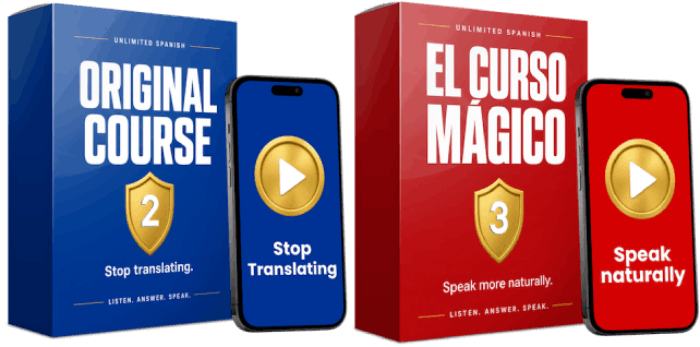
Continúa aprendiendo con uno de mis cursos completos en audio.
Mini-historia
Muy bien. Ahora vamos a practicar con una pequeña mini-historia de preguntas y respuestas. Te recomiendo respuestas cortas y rápidas. Intenta no traducir mentalmente. Puedes pausar el audio si lo ves necesario.
Estas técnicas las puedes encontrar implementadas al 100% en mis cursos completos en: unlimitedspanish.com
Empecemos.
Pepe ve un anuncio en el que buscan cortadores expertos.
¿Ve Pepe un anuncio en el que buscan comedores expertos?
No, no ve un anuncio en el que buscan comedores expertos, sino cortadores expertos. Pepe ve un anuncio en el que buscan cortadores expertos.
¿Qué ve Pepe?
Un anuncio. Pepe ve un anuncio. Él ve un anuncio.
¿Cómo son los cortadores del anuncio?
Expertos. Los cortadores del anuncio son expertos.
¿Qué buscan en el anuncio?
Buscan cortadores expertos.
Durante una semana, Pepe está practicando con su cuchillo afilado.
¿Está practicando Pepe con sus tijeras?
No. Pepe no está practicando con sus tijeras. Está practicando con su cuchillo afilado.
¿Quién está practicando?
Pepe. Pepe está practicando.
¿Y con qué está practicando?
Con su cuchillo. Con su cuchillo afilado.
¿Cómo está el cuchillo?
Afilado. El cuchillo está afilado. Es decir, está listo para cortar.
¿Durante cuánto tiempo está practicando Pepe?
Durante una semana. Pepe está practicando durante siete días.
El día de la entrevista, el jefe de personal pregunta a Pepe por su experiencia cortando jamón.
¿Le pregunta Pepe al jefe de personal?
No. Pepe no le pregunta al jefe de personal. Es al revés: el jefe de personal le pregunta a Pepe.
¿Qué pregunta? ¿Por su experiencia comiendo jamón?
No, no le pregunta por su experiencia comiendo jamón, sino por su experiencia cortando jamón.
¿Cuándo sucede esto? ¿El día antes de la entrevista?
No, no el día antes, sino el día de la entrevista. Esto sucede el día de la entrevista.
¿Quién le pregunta a quién?
El jefe de personal le pregunta a Pepe.
Pepe, confundido, admite que pensaba que el trabajo era para cortar jabón, no jamón.
¿Está Pepe confundido?
Sí, Pepe está confundido. Lo está.
¿Admite que pensaba algo diferente?
Sí, admite que pensaba otra cosa: que el trabajo era para cortar jabón, no jamón.
¿Pensaba que era para cortar jabón o jamón?
Para cortar jabón, no jamón. Eso era lo que pensaba.
¿Para qué era el trabajo?
Para cortar jamón. El trabajo era para cortar jamón.
Al oír la respuesta de Pepe, el jefe estalla en carcajadas.
¿Se pone triste el jefe al oír la respuesta de Pepe?
No, el jefe no se pone triste al oír la respuesta de Pepe. Al contrario, el jefe estalla en carcajadas. Se ríe mucho.
¿Cuándo sucede esto?
Al oír la respuesta de Pepe. Sucede en ese momento, cuando la oye.
Dado que el jefe es una buena persona, ofrece a Pepe el trabajo con la condición de realizar una formación específica.
¿Le ofrece el jefe el trabajo a Pepe?
Sí, el jefe le ofrece el trabajo a Pepe con una condición.
¿Ofrece el jefe el trabajo con dos condiciones?
No. No con dos, sino con una sola condición: realizar una formación específica.
¿Cuál es la condición?
Realizar una formación específica. La condición es realizar una formación específica.
¿Es el jefe buena persona?
Sí, el jefe es buena persona. El jefe es una buena persona.
¿Por qué el jefe ofrece a Pepe el trabajo?
Porque es buena persona. El jefe ofrece el trabajo porque es buena persona.
¿Qué debe hacer Pepe antes de empezar a trabajar?
Debe realizar una formación específica.
Bueno, este es el final de esta mini-historia. Pepe tiene la suerte de encontrar a un buen jefe. A pesar de la equivocación entre jamón y jabón, Pepe tiene otra oportunidad. La única condición es realizar una formación específica. ¡Quizá, con el tiempo, se convierta en un cortador de jamón —no de jabón— famoso!
Y, por cierto, gracias por escuchar este pódcast; de verdad significa mucho para mí. Si aún no lo has hecho, te invito a suscribirte, seguir el pódcast o dejar una reseña. Es un gesto pequeño, pero ayuda muchísimo: las plataformas entienden que este contenido vale la pena y así llega a más personas. Las leo todas y me motivan a seguir creando.
Así que, si valoras lo que hago, ese clic tuyo marca la diferencia. ¡Gracias de corazón!
Nada más por hoy. ¡Nos escuchamos la semana que viene!
Óscar Pellus
¿Quieres seguir practicando para hablar con más fluidez?
Continúa aprendiendo con uno de mis cursos completos en audio.
0 Comments